Grand Tour of Switzerland: The Complete Road Trip Guide and Which Car to Choose
2 srp., 2026 Road Trips 0
Switzerland's official road trip route connects the country's four language regions, its most dramatic alpine passes, and thirteen UNESCO World Heritage Sites into a single, signposted loop — and almost every traveller planning it eventually asks the same practical question that generic content rarely answers well: what car should you actually drive it in. This guide covers the route itself and the vehicle decision together, since on a trip like this, they're not separate questions.
What Is the Grand Tour of Switzerland
The Grand Tour is an official touring route developed by Switzerland Tourism, not an informal suggestion — over 650 signs mark the way, connecting cities, lakes, alpine passes and UNESCO sites into a single continuous loop that can be driven in full or split into shorter regional sections. It's built specifically as a road trip, in contrast to routes designed primarily around rail travel, which makes it a natural match for a self-driven rental rather than a guided tour.
The Route at a Glance: Distance, Stages, Regions
The eight stages are designed to be combined flexibly — some travellers drive the entire loop over one to two weeks, others select two or three stages for a shorter trip. The route deliberately favours scenic roads over motorways wherever the difference in travel time is reasonable, which is part of why it rewards a proper road trip mindset rather than point-to-point efficiency.
Why the Grand Tour Is Built for Electric and Hybrid Cars
This isn't an incidental detail; it's a deliberate feature of how the route was built, and it makes the Grand Tour one of the clearest cases where choosing an electric or plug-in hybrid rental genuinely fits the trip rather than requiring compromise. We cover the broader picture of premium EV rentals in Switzerland, including range and charging planning beyond this specific route, in our electric and hybrid rental guide.
When to Drive It: Season and Pass Closures
Exact opening and closing dates shift year to year with snowfall, so confirming current pass status before departure matters more than relying on a fixed calendar. For a winter alpine trip instead of the full summer Grand Tour, see our ski season driving guide, which covers what changes when passes are closed and roads are snow-covered.
Choosing the Right Car for the Grand Tour
Three practical factors tend to matter most for this specific route: range and charging behaviour if driving electric, comfort over a genuinely long multi-day itinerary with significant altitude change, and — for many travellers on a trip built around photo stops at 65+ official viewpoints — actually getting the specific model booked rather than a same-category substitute. A route this photogenic is exactly the kind of trip where the difference between the car you researched and a generic "or similar" swap becomes a real disappointment rather than a minor detail; our guide to guaranteed model rentals covers why that clause matters and how to avoid the substitution entirely.
Highlights Along the Way
The route's signature moments include the Tremola's hairpin climb toward the Gotthard Pass, the lakeside elegance of Lavaux's UNESCO-listed vineyard terraces, the high-altitude drama of the Julier and San Bernardino passes through Graubünden, and detours toward car-free Zermatt (parking at Täsch and continuing by train) for a Matterhorn view most itineraries build a full day around. None of these require driving off the official route — they're built into it.
Starting and Ending in Zurich
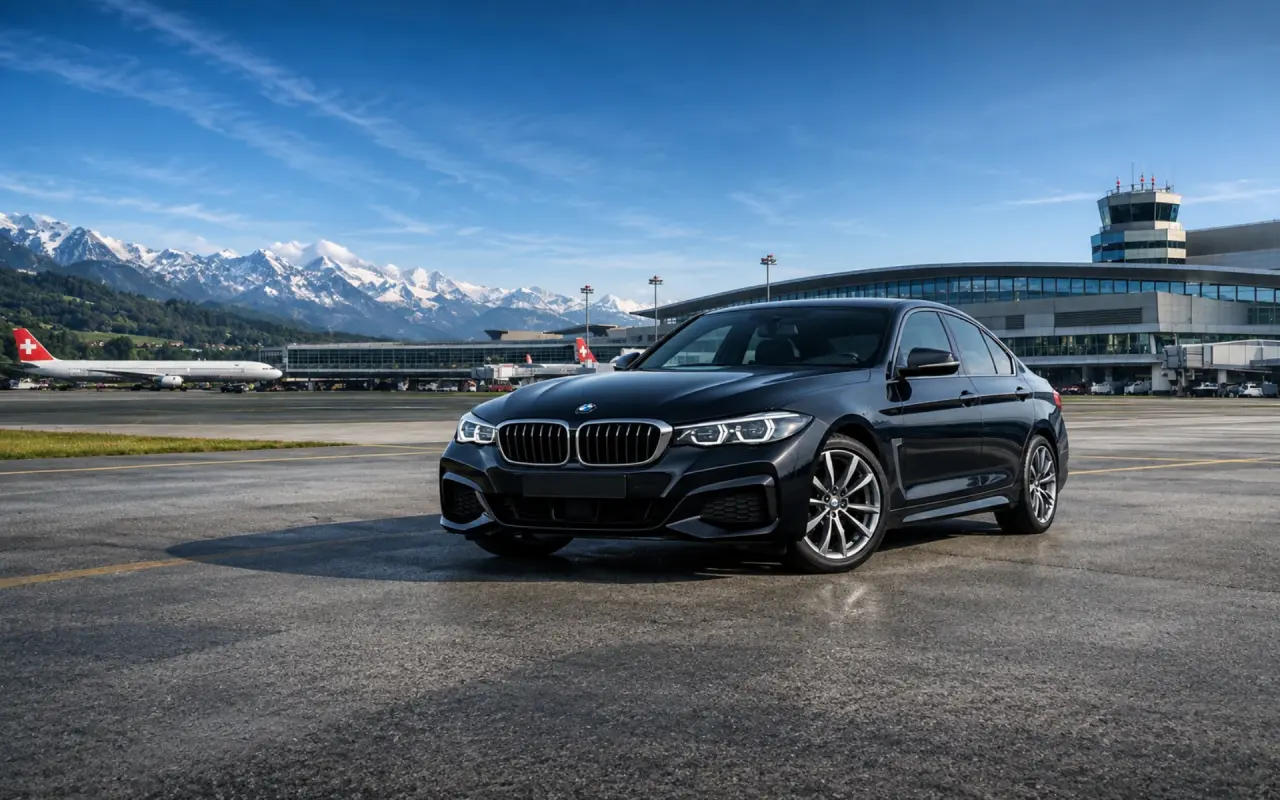
For travellers flying into Zurich Airport, picking up a rental there — with the vignette already handled and, for an electric rental, charging planned from day one — is the natural first step. Our Zurich Airport rental guide covers documents, pickup and everything else needed before setting off on the loop.
Planning Your Own Version vs. Following All Eight Stages
Not every traveller has the time for the full 1,600 km loop, and the official stage structure is built to be split: a shorter western route through Geneva, Gstaad and Zermatt, an eastern route through Appenzellerland, Graubünden and Ticino, or a compact northern loop between Basel and Zurich are all legitimate ways to experience the Grand Tour's character without committing to two full weeks. Deciding this before booking a car matters, since a shorter regional version has different range, timing and vehicle-category needs than the complete loop.
Frequently asked questions
How long is the Grand Tour of Switzerland?
Roughly 1,600 km across eight official stages, typically driven in 7 to 14 days depending on pace and how many stops are included.
When is the best time to drive the Grand Tour?
April through October, since several major alpine passes on the route close in winter and reopen only once conditions allow, with exact dates varying by year.
Can you drive the Grand Tour of Switzerland in an electric car?
Yes — the route is officially promoted as designed for electric vehicles, with more than 300 charging stations positioned along its length.
Do you have to drive the entire Grand Tour route?
No — the official eight stages are designed to be combined flexibly, and shorter regional versions (western, eastern, or northern loops) are common alternatives to the full circuit.
Where does the Grand Tour of Switzerland usually start?
Zurich is the most common starting and ending point, reflecting both its role as the main international gateway and the route's design as a returning loop.
Tags: #road-trips