The Real Cost of Renting a Car in Switzerland: Deposit, Insurance and Hidden Airport Fees Explained

11 лип, 2026 Rental Guides 0
The daily rate you see in search results is a starting point, not a final answer. By the time a deposit, location fee, insurance package and a couple of optional extras are added, the number on the invoice can look very different from the number that first caught your eye. This guide breaks down every layer of a Swiss rental quote so you know exactly what you're agreeing to before you hand over a card.
Why the Advertised Daily Rate Is Never the Full Price
Search comparison sites are built to show the lowest possible headline number, which is usually the base rate for the smallest available vehicle in a category, in low season, with no extras. That number is real, but it's rarely what most travellers actually end up paying, because most trips involve at least one of: a specific vehicle category above the cheapest option, an airport pickup, extra protection, or an additional driver. None of these are hidden fees in the deceptive sense — they're standard, optional or conditional charges that simply aren't reflected in the headline price shown in search results.
The Security Deposit: How Preauthorization Actually Works
This is the part of a rental that causes the most confusion, largely because a "hold" and a "charge" look identical on a bank statement at first glance. When you pick up the car, the rental company places a preauthorization on your credit card for an amount that covers potential damage, unpaid fuel, or unreported violations. That amount isn't taken from your account — it reduces your available credit temporarily. Once the vehicle is returned and inspected with no issues, the hold is released, typically within a few business days depending on your bank's processing time, not the rental company's.
Two details worth confirming before you book: whether the deposit is held on a credit card only (debit cards are usually not accepted for this purpose), and roughly how long release typically takes with that specific company.
Airport Location Fees Explained
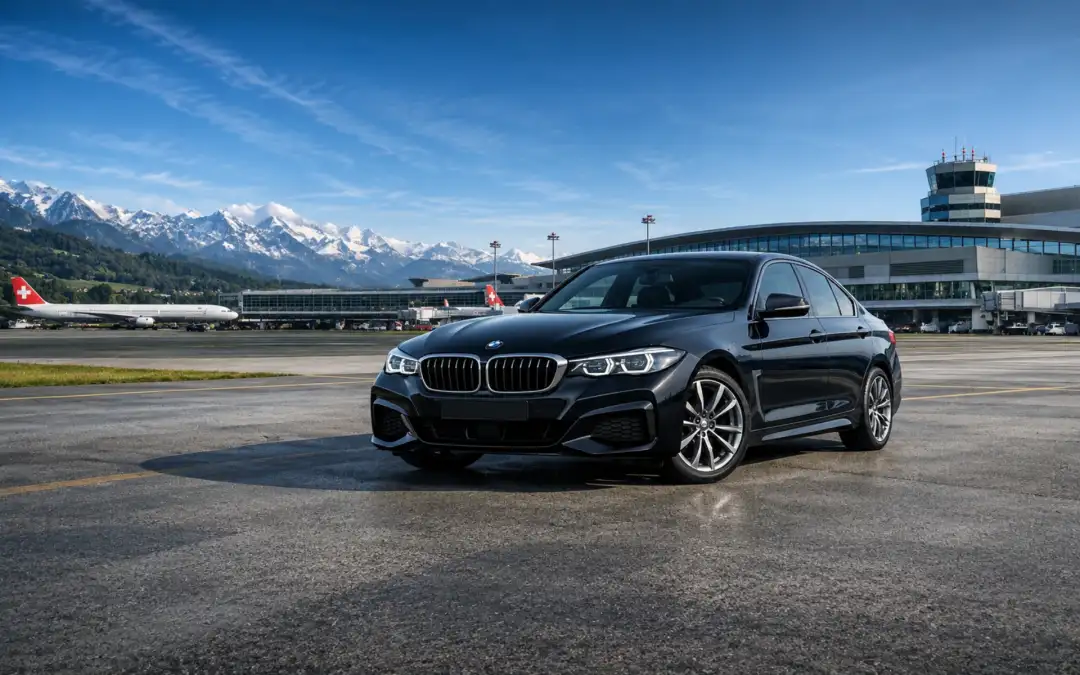
An airport rental desk pays for space inside a high-traffic facility, and that cost is generally passed on as a location fee built into the quoted price — not a surprise added afterward. The distinction matters: a transparent quote shows this fee as a line item before you book; a less transparent one folds it in vaguely or reveals it only at the counter. If saving that fee matters more to you than the convenience of picking up right at arrivals, renting from a city-centre location — after a short train ride into town — is a legitimate way to avoid it. We compare both options in our Zurich Airport rental guide.
Insurance in Switzerland: What's Mandatory vs. Optional
Third-party liability insurance is a legal requirement for any vehicle on Swiss roads, and it's included in every standard rental — this part isn't a decision you make. What is a decision is how much of the deductible (the amount you'd personally owe in the event of damage) you want to reduce through an optional protection package. A higher deductible means a lower daily protection cost but more personal exposure if something happens; a reduced or zero deductible costs more per day but limits your liability closer to zero. Neither option is objectively "right" — it depends on your risk tolerance and how the vehicle will be used.
One-Way Fees and Cross-Border Travel Costs
Picking up in one city and returning in another — or crossing into a neighbouring country — typically triggers additional charges beyond the base rate. A one-way fee within Switzerland is usually smaller than a cross-border one-way, and taking a rental outside Switzerland at all sometimes requires advance notice, since not every vehicle is cleared for every neighbouring country under standard terms. If your itinerary involves either scenario, confirming this before booking avoids a conversation you don't want to have at the counter.
After-Hours and Late Return Fees
Flight delays are the most common cause of an unplanned late or after-hours return, and it's worth checking — especially for an evening arrival or departure — what the specific policy is, and whether flexibility exists if a delay is flight-related rather than a simple oversight.
Optional Extras: What's Worth Paying For
GPS units, child seats, an additional driver and a prepaid full tank are the most common optional add-ons. A few are close to essential depending on circumstance (a child seat if travelling with a young child, an additional driver if two people will genuinely share the driving), while others are increasingly redundant — most travellers already have GPS navigation on their phone, for instance. The general principle: add only what you'd actually be inconvenienced without, since each extra adds to the daily total.
How to Read a Rental Quote Before You Book (Checklist)
Before confirming any reservation, a transparent quote should let you answer all of the following without asking:
- What is the base daily rate, and does it change with the actual pickup/return dates?
- What is the deposit amount, and is it a hold or a charge?
- Is there a location fee for this specific pickup point, and is it already included in the total shown?
- What insurance is included by default, and what does reducing the deductible cost per day?
- Are there fees for one-way, cross-border, or after-hours return, and do they apply to your itinerary?
- What extras are pre-selected, and can they be removed before payment?
If a quote can't answer these clearly before you enter payment details, that's the moment to ask — not after you've picked up the keys.
Frequently asked questions
Is the rental security deposit an actual charge?
No. It's a temporary preauthorization hold on your credit card, released after the vehicle is returned undamaged. It reduces available credit temporarily but is not a fee.
Why is an airport pickup more expensive than a city-centre one?
Airport counters carry higher operating costs due to their location inside a high-traffic facility, and this is typically reflected as a location fee built into the quoted price.
Is insurance included in a Swiss car rental?
Basic third-party liability insurance is legally required and included in every standard rental. Reducing the deductible through additional protection is optional and priced separately.
What triggers a one-way or cross-border fee?
Picking up and returning at different locations, or taking the vehicle outside Switzerland, typically triggers additional charges and sometimes requires advance notice depending on the destination country.
What happens if my flight is delayed and I return the car late?
Late or after-hours returns can trigger additional fees. It's worth confirming the specific policy at booking, particularly for evening arrivals or departures where delays are more likely.
Tags: #rental-guides